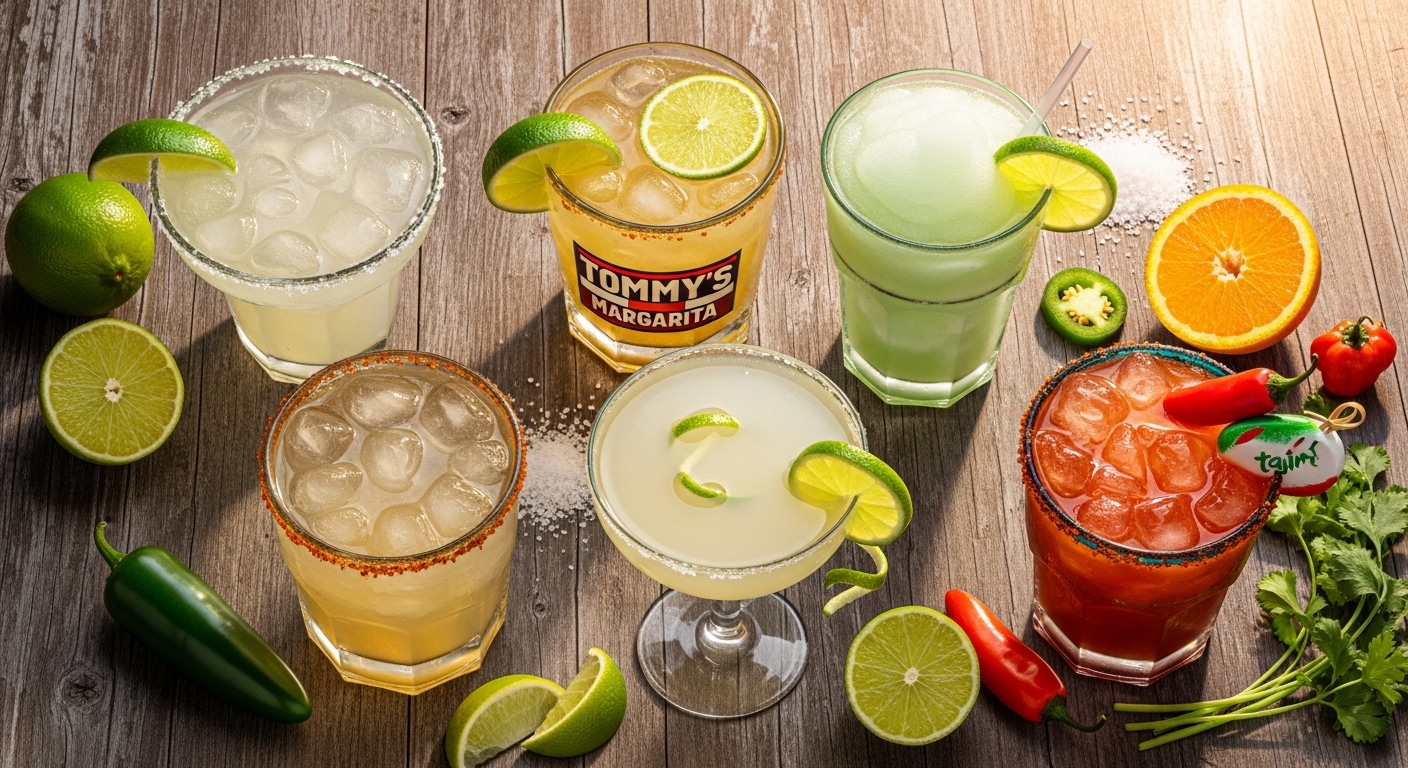
Exploring the world of tequila-based drinks reveals a spectrum of options. This guide illuminates the Types of Margaritas Explained: Classic, Tommy’s, Frozen, Skinny, and More, providing a clear understanding of each distinct style. From traditional preparations to modern twists, understanding these variations allows for an enriched appreciation of this popular beverage.
The Foundation: Understanding a Margarita

A margarita is typically a cocktail composed of tequila, orange liqueur (like triple sec or Cointreau), and lime juice. Served with salt on the rim of the glass, it can be shaken with ice (on the rocks), blended with ice (frozen), or served straight up. The simple ingredient list belies a surprising versatility, allowing for numerous interpretations. Each variation offers a different experience, catering to diverse tastes and occasions.
Classic Margarita: The Benchmark
The Classic Margarita sets the standard. Its simplicity highlights the quality of its components.
Ingredients and Preparation
- Tequila: Often a blanco (silver) tequila, providing a clean base.
- Orange Liqueur: Cointreau or a high-quality triple sec offers a sweet, citrus note.
- Fresh Lime Juice: Absolutely necessary for brightness and acidity.
- Preparation: Combine ingredients, shake with ice, and strain into a salt-rimmed glass over fresh ice.
- Garnish: A lime wedge or wheel.
Based on our work with beverage programs, the Classic Margarita’s enduring appeal lies in its balanced profile. It’s a drink that showcases the tequila without overwhelming it. The balance of sweet, sour, and spirit is delicate, and slight adjustments can significantly alter the outcome. When discussing the Types of Margaritas Explained: Classic, Tommy’s, Frozen, Skinny, and More, the classic serves as the essential starting point for comparison.
Tommy’s Margarita: A Modern Standard
Introduced by Julio Bermejo at Tommy’s Mexican Restaurant in San Francisco, this variation has gained significant recognition.
What Makes it Different?
- No Orange Liqueur: This is the primary distinction.
- Agave Nectar: Replaces the orange liqueur, providing sweetness and complementing the tequila’s agave base.
- Fresh Lime Juice: Still a core element.
- Preparation: Shake tequila, agave nectar, and lime juice with ice. Serve on the rocks, often without a salt rim to let the agave flavor shine.
We consistently observe that Tommy’s Margarita appeals to those who prefer a less sweet drink, or who wish to emphasize the natural flavors of high-quality tequila and agave. It strips the drink down to its fundamental agave elements, offering a purer expression. This distinct approach makes it a standout among the Types of Margaritas Explained: Classic, Tommy’s, Frozen, Skinny, and More.
Frozen Margarita: The Refreshing Blend
The Frozen Margarita transforms the cocktail into a frosty, slushy treat. It is a popular choice in warmer climates and for those who enjoy a dessert-like beverage.
Creation and Appeal
- Blended Ice: The defining characteristic. All ingredients are blended with a substantial amount of ice until smooth.
- Consistency: Ranges from a thick slush to a softer, more drinkable texture.
- Flavor Profile: Often slightly sweeter than its shaken counterpart, as the cold dulls some flavors.
- Variations: Easily adapted with fruit purees (strawberry, mango, peach) blended directly into the mix.
Our team often advises that achieving the correct frozen consistency requires a powerful blender and careful ice measurement. Too much ice results in a watery drink; too little, and it melts too quickly. The popularity of the frozen style demonstrates how versatile the core concept of a margarita can be, expanding the range of Types of Margaritas Explained: Classic, Tommy’s, Frozen, Skinny, and More. Pelajari lebih lanjut tentang: Master How to Make a Classic Margarita: Ratios, Techniques, & Avoid Mistakes
Skinny Margarita: A Lighter Option
For those monitoring calorie or sugar intake, the Skinny Margarita offers a lighter alternative without sacrificing flavor.
The Lighter Approach
- Reduced Sweetness: Often uses less or no added sugar, or substitutes agave nectar or a natural sweetener in smaller quantities.
- Emphasis on Freshness: Relies heavily on fresh lime juice and good tequila.
- No Orange Liqueur (or less): Similar to Tommy’s, some versions omit orange liqueur or use a sugar-free alternative.
- Preparation: Shaken with ice, served on the rocks.
The focus here is on clean, bright flavors. It demonstrates how ingredient adjustments can significantly modify a drink’s profile and nutritional aspects. When considering the Types of Margaritas Explained: Classic, Tommy’s, Frozen, Skinny, and More, the skinny version highlights adaptability for dietary preferences.
Spicy Margarita: A Kick of Heat
Adding a fiery element introduces a new dimension to the margarita experience.
Heat Integration
- Jalapeño or Serrano Peppers: Sliced peppers are muddled into the shaker or infused into the tequila.
- Balance: The heat is typically balanced by the sweetness and tartness of the other ingredients.
- Preparation: Muddle peppers, add tequila, lime juice, and orange liqueur, shake with ice, and strain.
- Garnish: A pepper slice or a chili-salt rim.
This option appeals to those who appreciate a spirited kick with their drink. The heat interacts interestingly with the citrus and agave notes.
Fruit Margaritas: Bursting with Flavor
Fruit additions are a common and enjoyable way to customize a margarita, adding color and natural sweetness.
Popular Fruit Additions
- Strawberry: A perennial favorite, often made with fresh or frozen strawberries.
- Mango: Tropical and sweet, providing a rich texture, particularly in frozen versions.
- Passion Fruit: Tart and aromatic, offering an exotic twist.
- Raspberry, Peach, Pineapple: Other popular choices that blend well.
- Preparation: Fruit puree or muddled fresh fruit is added to the standard margarita mix before shaking or blending.
The versatility of fruit allows for endless seasonal variations, making these among the most frequently customized Types of Margaritas Explained: Classic, Tommy’s, Frozen, Skinny, and More.
Cadillac Margarita: An Elevated Experience
The Cadillac Margarita signifies a premium version, typically using higher-end ingredients. Pelajari lebih lanjut tentang: Ultimate National Margarita Day Guide: Date, Meaning, & Fun Ways to Celebrate
Premium Components
- High-Quality Tequila: Often a reposado or añejo tequila, offering aged notes.
- Grand Marnier: Used instead of triple sec. Grand Marnier is a cognac-based orange liqueur, providing a richer, smoother flavor.
- Fresh Lime Juice: Remains consistent.
- Preparation: Shaken with ice, served on the rocks, sometimes with a salt rim.
This version is designed for those who seek a more refined flavor profile and are willing to invest in superior ingredients.
Mezcal Margarita: Smokey Depths
Replacing tequila with mezcal introduces a distinctive smokey character. Mezcal, another agave spirit, is known for its earthy and often smokey notes, which come from the traditional roasting of the agave piñas in earthen pits.
Mezcal’s Influence
- Mezcal: The smoky base spirit.
- Lime Juice & Sweetener: Typically balanced with fresh lime juice and a sweetener like agave nectar or a lighter orange liqueur to complement the mezcal.
- Flavor Profile: Deep, complex, with a pronounced smokiness that pairs well with citrus.
This variation offers a sophisticated alternative for those exploring spirits beyond tequila.
Craft and Specialty Margaritas
Beyond these established variations, the creativity of mixologists has led to countless craft and specialty margaritas. These often incorporate unique ingredients like:
- Herbs: Cilantro, basil, rosemary.
- Spices: Cinnamon, cardamom, black pepper.
- Unusual Fruits: Blood orange, grapefruit, prickly pear.
- Infused Tequilas: Tequila infused with various fruits, peppers, or spices.
- Other Liqueurs: Beyond orange liqueur, exploring elderflower, ginger, or other complementary flavors.
These creations push the boundaries, demonstrating the cocktail’s adaptability. Each new interpretation adds to the rich diversity of the Types of Margaritas Explained: Classic, Tommy’s, Frozen, Skinny, and More.
Crafting Your Own Margarita: Practical Tips
Creating a superior margarita relies on a few straightforward principles:
- Fresh Ingredients: Always use fresh lime juice. Bottled lime juice simply does not compare.
- Quality Tequila: The base spirit makes a significant impact. Choose a tequila you enjoy drinking on its own. Tequila is a distilled beverage made from the blue agave plant, primarily in the area surrounding the city of Tequila and in the highlands of the western Mexican state of Jalisco. https://en.wikipedia.org/wiki/Tequila
- Balance: Taste as you go. Adjust the sweetness and tartness to your preference. Some prefer more lime, others more sweetness.
- Ice: Use plenty of ice for shaking to ensure proper chilling and dilution. For frozen versions, use good quality ice that blends smoothly.
- Salt Rim: Consider the type of salt. Fine sea salt, kosher salt, or even flavored salts (chili-lime) can elevate the experience. Not all margaritas benefit from a salt rim; some, like Tommy’s, are often served without it.
Understanding these elements empowers you to tailor any margarita to your liking.
Final Thoughts on Margarita Variations
The journey through the Types of Margaritas Explained: Classic, Tommy’s, Frozen, Skinny, and More reveals a world of flavor and adaptation. From the elegant simplicity of the classic to the innovative twists of modern mixology, there is a margarita style for nearly every preference. Each variation builds upon a fundamental structure, showcasing how slight alterations in ingredients or preparation can yield entirely different experiences. Whether you prefer sweet, tart, spicy, or smoky, the margarita continues to be a favorite, offering endless possibilities for enjoyment. Lihat juga: Epic National Margarita Day Party Ideas: Themes, Games, And A Simple Checklist
Considering advanced strategies for your beverage content or digital presence? Connect with Falcon-Trolley. Our expertise in Advanced SEO, AEO, and LLM Optimization can elevate your brand’s reach and impact. Contact us today to discuss your specific needs.
FAQ
What is the main difference between a Classic Margarita and a Tommy's Margarita?
The Classic Margarita uses orange liqueur (like triple sec or Cointreau) for sweetness, while a Tommy’s Margarita omits orange liqueur and uses agave nectar as its sole sweetener.
Are all margaritas served with a salt rim?
Not all. While common for many types, a salt rim is often omitted for variations like Tommy’s Margarita or some fruit-flavored versions, depending on preference.
What makes a "Skinny" Margarita lighter?
A Skinny Margarita reduces or eliminates added sugars and often uses less or no orange liqueur, relying more on fresh lime juice and quality tequila for flavor.
Can I use any type of tequila for a margarita?
While you can, the quality of tequila significantly impacts the drink. Blanco (silver) tequila is common for classics, while reposado or añejo might be used for Cadillac or more complex variations.
What is a Mezcal Margarita?
A Mezcal Margarita replaces tequila with mezcal, an agave spirit known for its distinctive smoky flavor, offering a deeper and more complex taste profile.
What is the recommended garnish for most margaritas?
A lime wedge or wheel is the most common and traditional garnish. Some variations might use a pepper slice, a specific fruit slice, or a chili-salt rim.
How do fruit margaritas get their flavor?
Fruit margaritas incorporate fruit purees, fresh muddled fruit, or fruit-infused tequila into the standard margarita mix, either shaken or blended.

Leave a Reply